The third “word” of Jesus from the cross was spoken to his mother and his dearest disciple. He said to them:
“Woman, here is your son,” and to the disciple, “Here is your mother.”
John 19:26-27 NIV
Jesus’ mother Mary had been watching the grisly crucifixion of her son unfold all morning. As she gazed up at her firstborn nailed to a cross, I can’t imagine the depths of her heartbreak.
Love. The price and the prize.
In the aftermath of the 9/11 attacks, the Queen remarked during a memorial service:
“Grief is the price we pay for love”
The stronger and fuller the human heart in its loving. The weaker and more empty it is in its grieving. They are proportional. When you risk to love, you risk to grieve in proportion to the degree of ventured love.
So the poignant images of the Queen, dressed in black and all alone in the pew at her late husband’s funeral, spoke a thousand words. Or more accurately, cried a thousand tears.
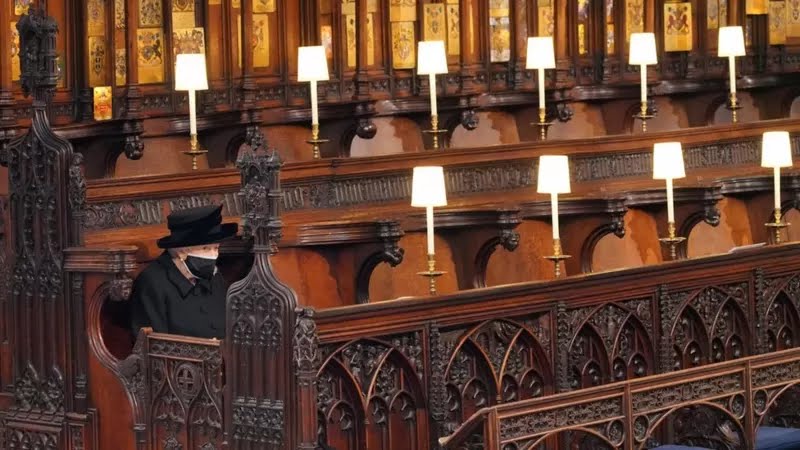
They speak to the great risk of human love. Great love, forged and enjoyed over decades. Years of relationship, hardship and trials. Every high and low, shared with another. Two hearts knit together by life and love. Wrenched apart by death.
And mothers seem to posess an additional and uniquely maternal, almost inexhaustible capacity for love. We know that during pregnancy, the heart of a mother changes. It works harder and pumps more blood than it did before. But in a deeper way, from those first moments of nurturing and protecting in the womb, the mother’s heart is changed forever. It has a new primary focus. A new chief concern. A new central object, uniquely capable of swelling it with joy or crushing it with grief like no other.
And so, it was with all the fullness of a mother’s heart that Mary loved her son Jesus. But the old prophet Simeon had once warned her; “a sword will pierce your own soul”. For years she’d wondered what he had meant. But now she knew. As she looked up at her precious son, that soul-piercing sword was in up to the hilt. His torture was hers.
Compassion. Christ’s centre.
But Jesus, in the depths of his own affliction, concerns himself first with hers.
This is right at the heart of what compassion means. That word comes from the Latin “compati”, meaning to “suffer with”. He sees her grief and feels it added to his own.
It is likely that Mary was already a widow by this stage, that she had said goodbye to a loved one before. But we know that doesn’t make loss any easier.
So the last thing she would have been thinking about, was tomorrow. The practicalities of life fade into insignificance during both the raptures of love, and the darkness of sorrow.
And though immobilised by his nails, Jesus was not paralysed by his sufferings. First to the soldier, then to the rebel, now to his own beloved mother. With every agonising word from the cross, Jesus is serving others, providing precisely what each of them needs most. Forgiveness to the guilty, hope for the dying and now provision for the widow.
Though you could excuse some selfish words from the cross. Christ offers none.
Provision from the cross.
By charging his most beloved disciple with his mother’s care, he was ensuring she would have a home to live in, food to eat and someone to provide for and protect her. Doing it publicly like this would give her a legal standing and a place in society. This was practical provision.
But I suspect this was about more than just getting one’s house in order. Jesus knew that in the days to come, Mary would need someone trustworthy to be there for her. To be that “presence in the midst of suffering”. Someone who had loved and trusted Jesus. Who could help her make sense of the horrible spectacle of the cross. Who could point her beyond Friday afternoon and towards Sunday morning. He chose his disciple John.
John was present at the transfiguration, he was there when Jairus’ girl came alive, and he’d seen him walk on water. This was someone who had beheld Jesus’ authority and power in the flesh like few others. But also someone who had seen Jesus himself cry and suffer.
To care for his grieving mother, Jesus chose the man who would one day make sense of the cross like this:
“This is how we know what love is: Jesus Christ laid down his life for us.“
1 John 3:16 NIV
For Mary, the cross was a defining moment of grief. For John, it was a moment of redefining love. And Jesus wanted him to be there to help Mary come to realise it for herself. This was relational provision.
The cross. Gain or loss?
For Mary, the cross had seemed like a whole world of loss. Jesus’ words might have offered some mitigation, but she was still losing her beloved firstborn son. So still nett loss, right?
And perhaps for you, the cross of Christ might feel like loss too. Choosing to follow the one nailed to it might mean loss of status, relationships, wealth, comfort or reputation. For some, it might mean following Christ to a cross of their own. What does the cross say to this?
And sometimes God does make practical and relational provision in the midst of our own specific losses. But sometimes he doesn’t. So what do we do if not?
The answer to all of these gets right at the heart of the Christian faith. It gets down to the great unchanging, invincible realities of the cross. The things that circumstance can never take away. The things that remain true in plenty, and in loss.
Jim Elliot, a missionary to the Auca tribe hinted at these when he said:
“He is no fool who gives what he cannot keep, to gain what he cannot lose!”
To gain!
Jim Elliot died aged 28 in a remote Ecuadorian jungle, far from his wife and daughter. And he counted it gain. He considered his own temporary life as nothing, compared to the eternal gain won for him in Christ Jesus.
Know that this is because further provision is made by Christ on the cross. A spiritual and everlasting one. Not just for his mother. Not just for Jim Elliot, but for you and I too.
Already from his words on the cross we can see that Jesus provides what cannot be lost.
In his death on the cross, he provides perfectly, the sacrifice needed to pay for your sin. Meaning total forgiveness, just like the soldier. All your guilt and shame can be nailed to that cross. Dealt with forever. No more payment required. That is what he would give you if you would just receive it.
In his death, your old self dies too. The cross is the end. Not of fun or pleasure or adventure. But the end of the former self, with all its failings and mistakes. But as we will see, the cross is also the beginning. It can be the beginning of your new life. With a new direction and new affections. The past doesn’t disappear, but the liberating freedom of the new life that begins at the cross can be yours today.
And the promise of eternal paradise is one already purchased. Paid for in blood. Jesus’ perfect, innocent blood. And that can’t be undone. This blood can’t be un-shed. These words can’t be unspoken. It is the most rock solid promise that has ever been made to me. And it’s extended to you too.
I totally get that if you’re not a Christian, this might all seem pretty mental. And you are absolutely right. These things are mindblowing. I thought that at the beginning and actually I still do. But the reason I’m writing these is so that you might begin to see how precious and wonderful and life transforming these realities can be. So bear with it.
With the remaining “words” from the cross, we will see more of why the cross is ultimately gain. Why it can be worth living, and even dying for.
 Affections and reflections
Leave a comment